
Apr
News
What Are Damos and A2L? An In-Depth but Easy-to-Understand Analysis for Tuners
What Are Damos and A2L? An In-Depth but Easy-to-Understand Analysis for Tuners
What Are Damos and A2L? An In-Depth but Easy-to-Understand Analysis for Tuners
In the field of ECU tuning, WinOLS, ECU remap, and ECU calibration, two types of data are mentioned very often: Damos and A2L. Many beginners assume they are almost the same, because both can make an ECU file easier to read. However, if you look more closely, they are quite different in terms of nature, usage, and practical value in real work. A2L is an ECU data description format based on the ASAM MCD-2 MC (ASAP2) standard, used to describe internal ECU variables for measurement and calibration. WinOLS also supports importing DAMOS and ASAP2/A2L, which shows that both types of data can play a role in ECU file analysis workflows, but that does not mean they are the same thing.
What is Damos in practical tuner terms?
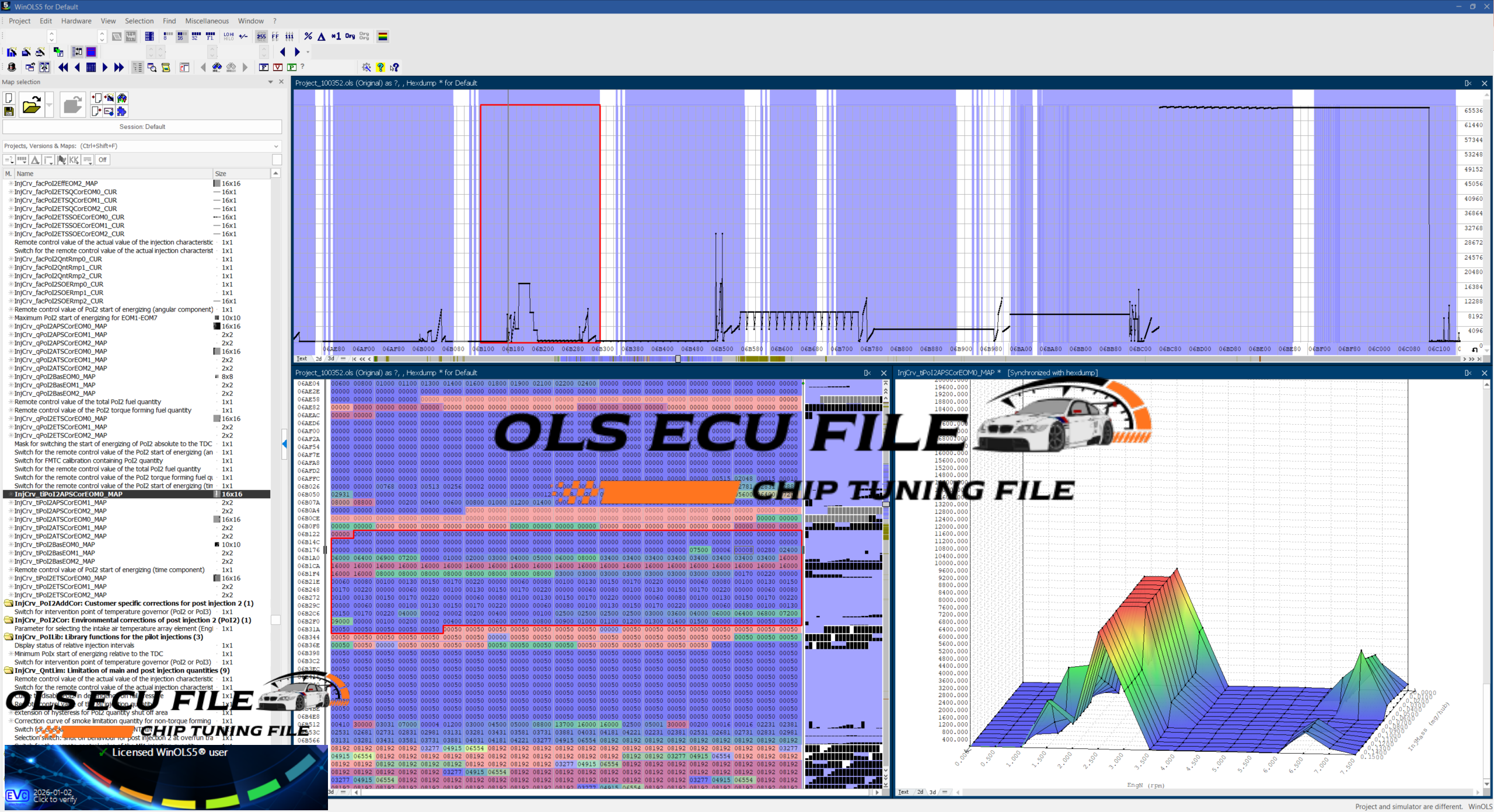
In the simplest practical sense, Damos is definition data that helps you see an ECU file more clearly. When a file is well defined, you may see map names, axes, factors, limiters, switches, and many important calibration areas instead of having to search through raw binary data manually. In the tuning community, a “full damos” is often understood as a file that defines a large number of maps and greatly reduces the time needed for manual map searching and naming. This understanding is very close to how tuners actually use it in WinOLS. EVC states that WinOLS can import DAMOS/ASAP2 information into a project, which supports this practical view.
The point most tuners care about is not a theoretical definition of Damos, but a very practical question: does this file help me work faster? If a Damos file is good, matches the right version, the right software, and the right ECU, it can help you identify groups such as driver wish, torque limiter, boost target, rail pressure, smoke limiter, lambda limiter, EGR, DTC switches, and many other control areas much more quickly. That is why Damos has such high value in the WinOLS tuning environment.
What is A2L, and why is it more technical?
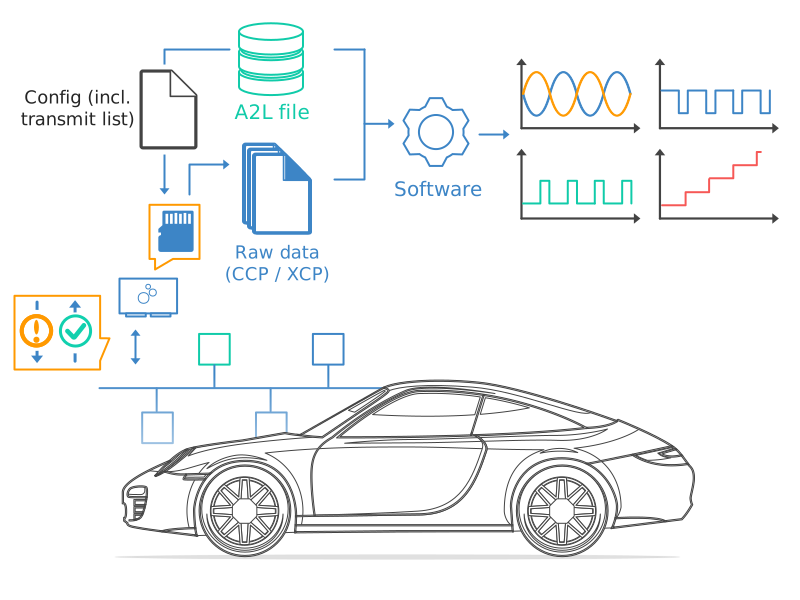
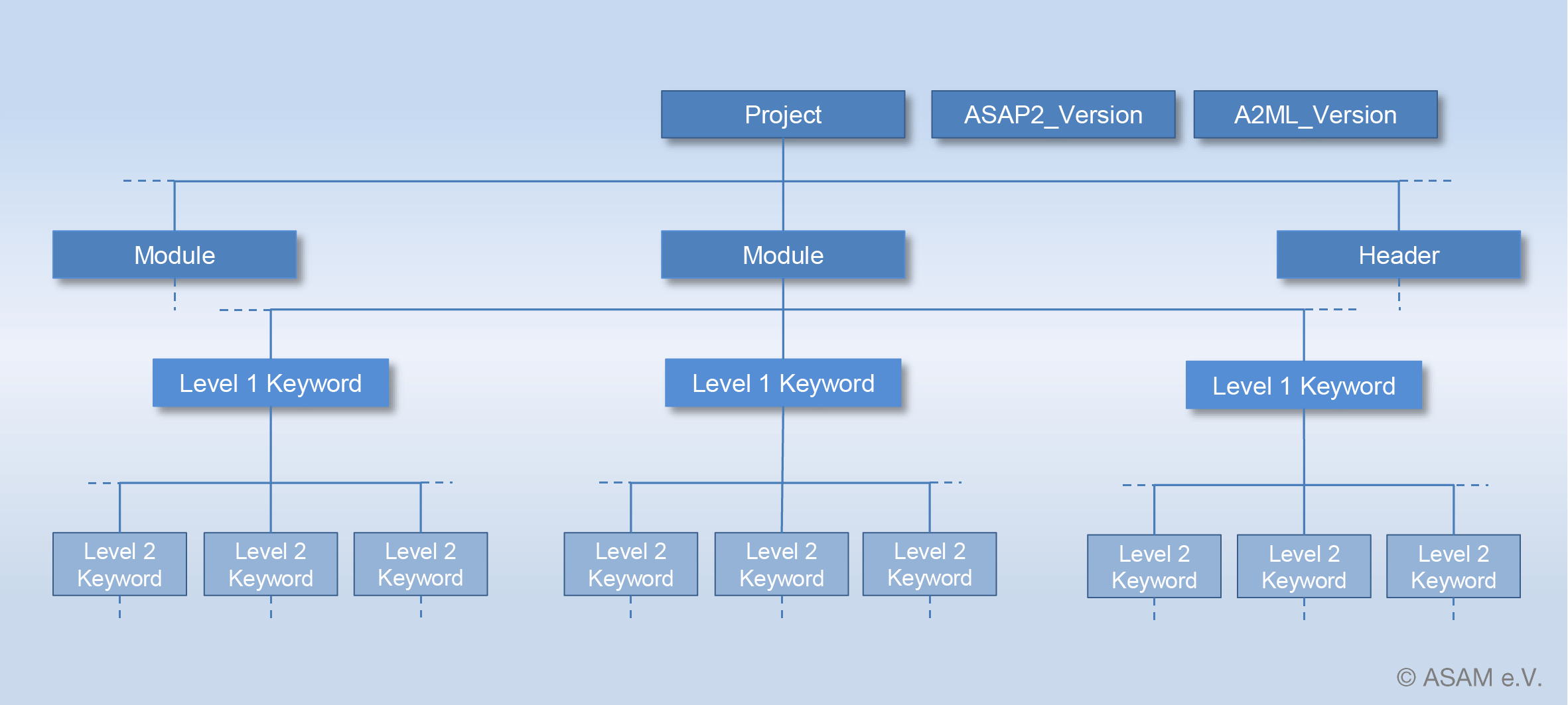
A2L is not simply a “file with map names.” In essence, it is an ECU data description file based on the ASAM standard, and it can contain information about measurement variables, calibration variables, memory addresses, data types, record layouts, dimensions, and conversion methods. ASAM defines A2L as a way to describe internal ECU variables for measurement and calibration purposes. In simpler words, A2L is like a technical description sheet that tells calibration software what variables exist inside the ECU, where they are located, how they are stored, and how raw values should be converted into physical units.
That is why, while Damos is often valued by tuners for practical map work, A2L is stronger on the side of standardized data description. It fits better into professional calibration environments, where the user does not only want to find maps for editing, but also needs to read, measure, log, validate, and interact with ECU variables in a structured way. This is also why A2L appears so often in engineering toolchains and ECU development workflows.
What is the difference from a tuner’s point of view?
From a tuner’s perspective, the easiest way to understand it is this:
- Damos helps you work with the ECU file more easily.
- A2L helps software understand ECU data more correctly and in a standardized way.
This is not a complete academic definition, but it is very close to real workshop practice. Damos is usually appreciated because it directly supports map finding and file work inside WinOLS. A2L is more about technical structure and serves measurement and calibration according to a standard. So for a tuner who mainly wants to open a file and find maps quickly, Damos is often more useful. For someone doing structured calibration work or using engineering toolchains, A2L provides more fundamental value.
The important point is this: A2L does not always replace Damos in practical tuning work, and Damos is not a public technical standard in the same way A2L is. This is one of the areas where many newcomers get confused.
Why do many tuners prefer Damos in WinOLS?
Because in daily work, tuners usually do not need all the theory behind the ECU first. They need a project that is readable, fast, and usable. A good Damos file can save a huge amount of reverse engineering time. Instead of manually examining data blocks, comparing map sizes, guessing axes, and testing each area, you can move much faster toward the maps that matter for the remap goal. In practical terms, this is why Damos is often seen as more useful in tuning workflows. WinOLS itself is presented as software built to search, locate, and modify maps within ECU files, which explains why properly imported definition data is so valuable.
Of course, that does not mean that having Damos automatically makes everything perfectly correct. The project must still match the imported definition properly. In real life, even within the same ECU family, a different software revision can change map location, axis layout, scaling, or data organization. That is why version matching remains critical. This is also consistent with the way A2L and WinOLS project-based workflows are described in the sources above.
How can you recognize Damos and A2L files?
This part is very important because many people buy files and judge them only by the file extension.
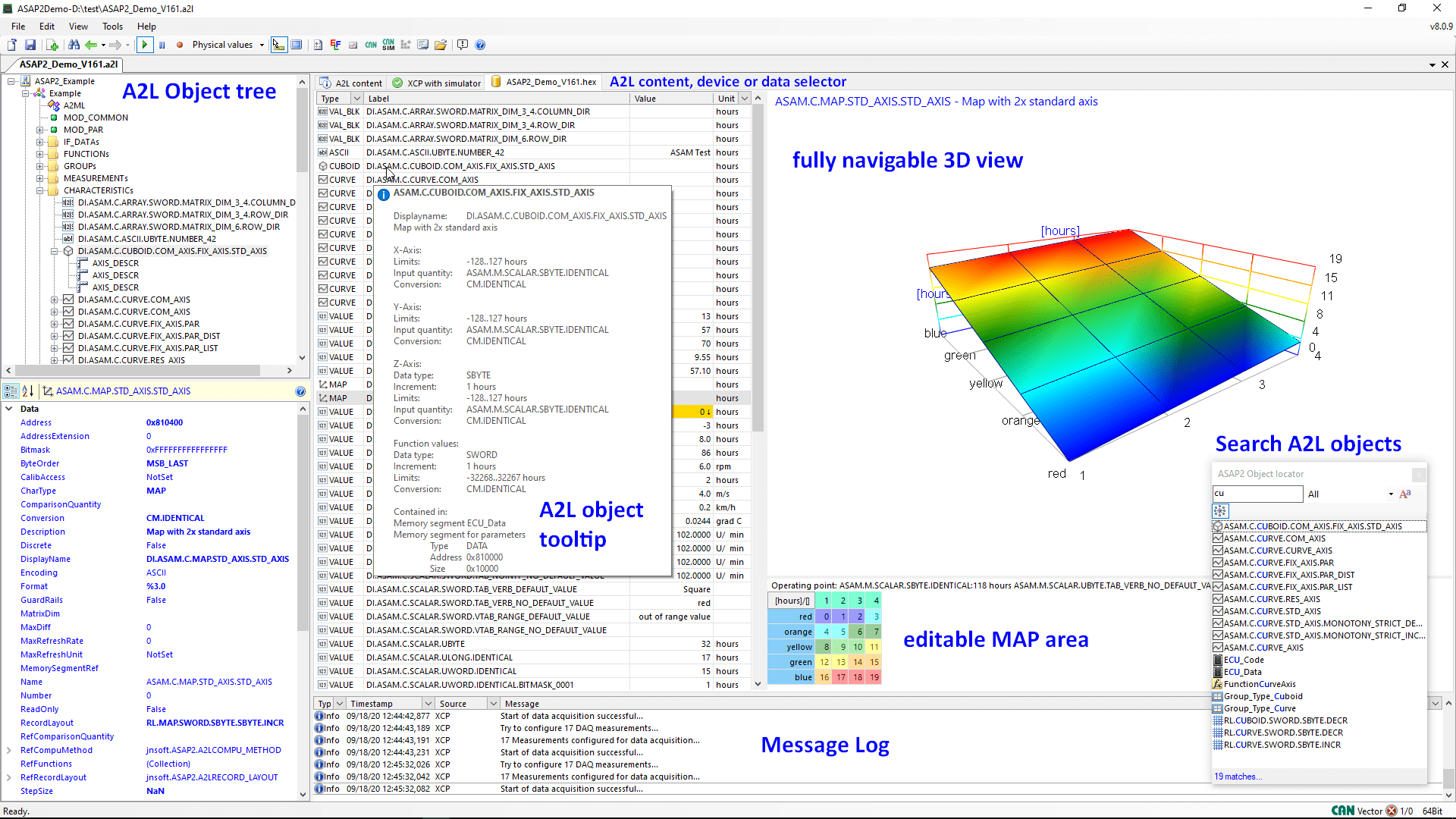
For A2L, the most standard and common extension is: .a2l , ASAM also references related A2ML/AML concepts within the standard, but in real ECU calibration and tuning work, when people say “A2L file,” they almost always mean a .a2l file.
For Damos, WinOLS supports imports such as: .dam and .damosIn addition, in the market you will often receive files as: .ols or .olsx
But this must be said very clearly: .ols or .olsx does not automatically mean it is a full Damos file. These are first of all WinOLS project files. They may contain a fully imported Damos or A2L definition, they may contain only partially defined maps, or they may simply be packaged projects or mappacks. So the correct question is not just “what is the extension?” but rather:
- does it match the correct ECU?
- does it match the correct software number?
- are the factors and axes reasonable?
- are the definitions actually usable?
- does the project really match the original file?
Those criteria matter much more than the filename.
How many maps does a Damos or A2L file usually contain?
This is a common question, but answering it with one fixed “average number” is misleading. The reason is simple: A2L does not only contain maps. It can also contain many other objects such as measurements, characteristics, record layouts, data types, conversion methods, and interface-related information. In the same way, a complete Damos file may contain much more information than the number of maps a tuner will actually edit.
In practice, a complete file may contain a very large number of objects, sometimes thousands. But that does not mean a tuner will use or modify all of them. Most users focus only on the key maps related to the remap goal. So the real value of a file is not simply how many maps it contains, but whether it contains the right maps, whether the definitions are clear, and whether it can be used safely and effectively in real work.
Why do people confuse Damos, A2L, and mappack?
Because all three can make an ECU file easier to read, but they do so at different levels and for different purposes.
A mappack usually focuses only on the key maps needed for tuning. It is lighter and more directly oriented toward practical editing.
Damos is usually more complete than a mappack. It may include more maps, axes, limiters, switches, factors, and calibration logic.
A2L is more oriented toward technical ECU data description and standardization, especially for measurement and calibration systems.
In simple terms:
- mappack = enough for fast tuning work
- damos = better for understanding the file more deeply in WinOLS
- A2L = stronger for standardized technical data description
Easy conclusion for tuners
If you are a tuner and your main goal is to open a file, find maps quickly, reduce manual searching time, and work directly in WinOLS, then Damos is usually the more useful choice.
If you work in a more advanced calibration environment, need measurement, variable logging, structured ECU data understanding, or integration into engineering toolchains, then A2L provides a stronger standardized foundation.
So the right question is not “which one is better, Damos or A2L?” The better question is:
- in your actual workflow, which type of data helps you understand the ECU better and work more efficiently?
- For many WinOLS tuners, Damos is closer to practical needs. For standardized technical calibration work, A2L is the stronger foundation.
Where can you buy Damos and A2L?
If you are looking for Damos files or A2L files for WinOLS, ECU tuning, ECU remap, and ECU calibration, you can also check olsecufile.com to find data that fits your work needs.
Support: Original File, Mappack, Super Mappack, Damos, A2L File Contact us:
- Telegram
- Email: olsecufile@gmail.com

